
Determining your Scope for ISO 14001
“Scope of the EMS includes the organization's functions, physical boundaries, and its activities, products and services to which ISO 14001 requirements will apply.”
Source: https://committee.iso.org
Contents
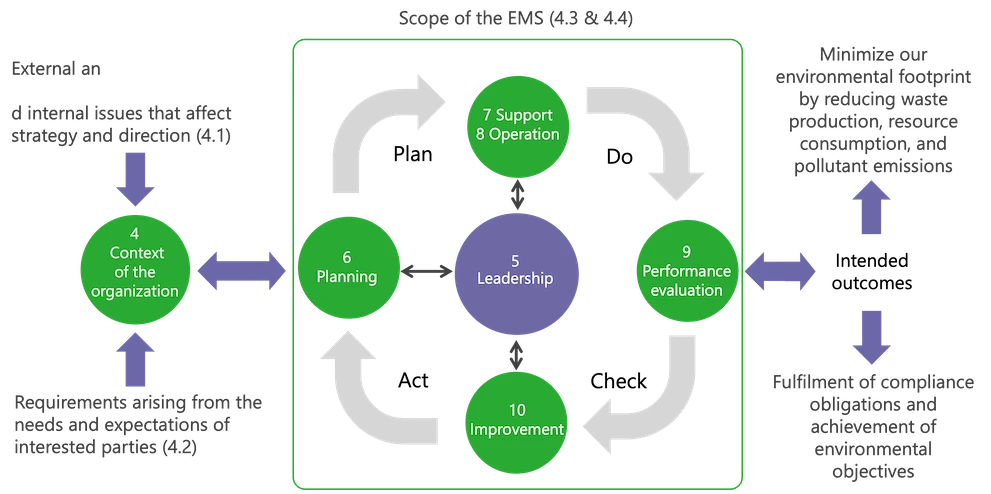
When developing the scope of the EMS, key components to consider are:
- The identification of the activities involved
- The products and services that result
- The location where the activities take place
The scope as stated on the ISO 14001 certificate will be succinct and comprise one or two sentences.
Organizations can demonstrate their understanding of the scope by identifying aspects, establishing actions and objectives, and developing operational control and influence.
EMS Scope - What Should you Include?
Your Scope should include:
- Activities
- Products
- Services
- Facilities
that have or can have significant environmental aspects, or to evade compliance obligations.
Who is Included in your Scope?
- The whole of the organization
- Specific and identified sections of the organization
- One or more functions across the organization
The degree of control needs to be determined for the environmental aspects associated with such things as procured goods and services, outsourced processes, product performance requirements, and end of life treatment (recycling, disposal, etc.).

Who Should Set the EMS Scope?
Top management should accurately set the scope of your environmental management system as per the ISO 14001 requirements.
Your organization has the freedom and flexibility to define its boundaries and the limitations of the scope, as long as the Top management team have authority to establish an environmental management system.
Internal & External Issues and Interested Parties
Internal and external issues and interested parties’ needs and expectations provide guidance on what an organization may decide to include in the scope.
For example, an organization may decide to include certain facilities in its scope due to expectations from an interested party, or to extend its scope to cover previously excluded products due to an external issue regarding greater environmental scrutiny.
Compliance Obligations
Compliance obligations are an important consideration as they can impose the level of control your organization has to exert, which will consequently impact the content of system’s scope.
A good example of this relates to waste law, where the producer often retains responsibility for its waste until it is finally treated or disposed of.
Make the Scope Available
The scope of your organization’s environmental management system should be made available to interested parties either in an unrestricted manner, for example online or in the reception area at each physical location.
We recommend the Scope be available as a PDF download (easily distributed on your website or by email) along with a copy of your ISO 14001 Certificate.

Related Information You Might Find Useful
- Scope of the EMS
- How To Write Your Scope For ISO 9001 (With 7 Examples) [ISO 9001]
- 4.3 Determining the Scope of the OH&S Management System [ISO 45001]


