
What is An Environmental Management System?
An Environmental Management System describes your company's commitment and responsibility in terms of any legal requirements it needs to adhere to and the environmental impact it may have.
It should also outline and define a clear commitment regarding pollution – how to manage and prevent it and its continuous improvement policies.
Contents
ISO 14001 Environmental Management System
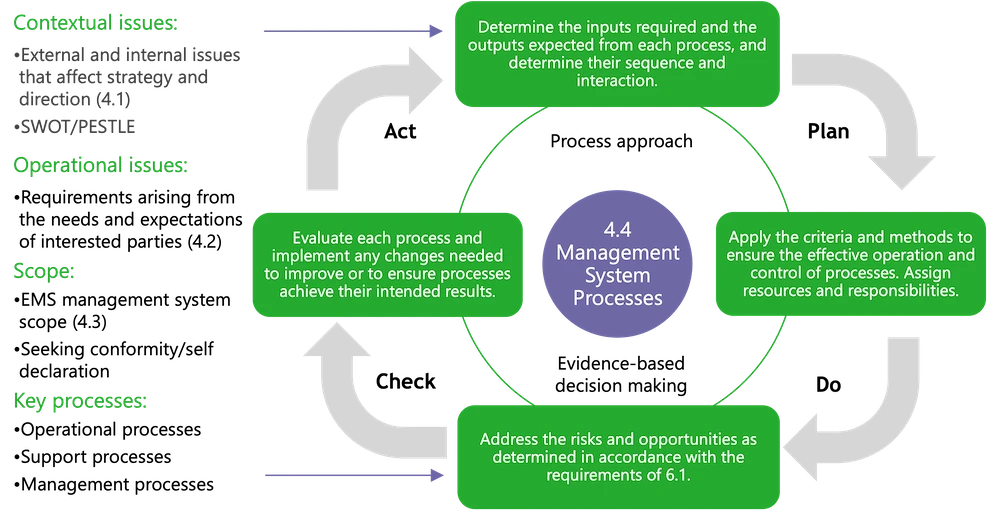
ISO 14001:2015 includes specific requirements necessary for the adoption of processes when developing, implementing and improving the environmental management system.
ISO 14001 requires an organization to systematically define and manage each process and its interactions so as to achieve the intended results in accordance with both the policy and strategic direction of the organization.
The environmental policy, strategic policies, and general business direction and objectives need to be fully aligned with one another. These all need to be wholly integrated with one another where possible and applicable.
To fully understand ISO 14001, it is imperative to be familiar with the terminology and all terms and definitions contained within.
What is a Process?
- A process is set of interrelated or interacting activities which transforms inputs into outputs
- A series of activities and actions that are consistently repeated to produce a change to a product or service
What is a Procedure?
- A procedure is a specified way of fulfilling an activity within a process

Process Approach for ISO 14001
Environmental systems use a combination of interactions and sequences with the objective of reaching the desired output.
A process approach is when an organization with an active Environmental Management System that takes into account all possible variables and their effects on the EMS objectives.
The process approach method is when all actions and activities are managed together with a consideration toward each other and an expected end result.
Inputs
- A collection of all elements required to sustain a process; will include raw materials, resources, and machinery
Outputs
- The result of processes
- Goods/services/negative outputs such as waste products, pollution
- Outputs are not fundamentally the final element but sometimes the input to the following process in the chain
Process Approach Impact
The process approach is a vital part of certification and compliance to the ISO 14001 standard. In isolation, it does not guarantee any financial or environmental benefits, however utilizing a process-based EMS will be a beneficial mechanism in providing the organization with continuity throughout all operations.
A process approach creates a vital link between the EMS requirements, policies, objectives, actions, and performances. This helps to reduce the environmental impact and proves to be a most effective way to mitigate and manage any environmental hazards, risks, and impacts.
The process approach allows a more systemic and analytical view of how processes interact and their effects. There is less focus on local problems arising from inside the processes. This method of managing the EMS allows a complete understanding of processes and their interactive relationships and their long- and short-term effects on the organization.

What Processes should be Documented for the EMS?
- Supplier selection and performance
- Manufacturing processes
- Internal or external customer issues
- Material, resources, energy, and waste
- Design, operation, production, logistics
- Activities, products, and services
- Customers and end users
Some documented information such as environmental risk assessments, operational procedures, work instructions, and flow charts, can be used as evidence that the organization has implemented all required environmental management system processes.
When integrating EMS requirements into your business’s processes, ensure this is done at 3 levels:
- Strategic
- Functional
- Departmental
Strategic Environmental Processes
- Understanding and communicating how the EMS contributes to your business’s overall goals
- Include environmental risks and opportunities as part of the corporate/enterprise risk management process and using such systems to understand the context of the organization
- Using communication, sustainability or corporate/social responsibility strategies to support the process of identifying interested parties and their needs and expectations
- Reporting environmental performance alongside financial reporting and considering environment in financial processes
- Developing and reviewing environmental performance indicators as part of the normal business performance review process
- Understanding the environmental implications of other business performance indicators such as scrappage rates and cost of energy
Functional Environmental Processes
- Environmental performance and environmental initiatives being included in employee business briefings, newsletters and other forms of communication
- Top management team being involved in external and internal audits and ensuring corrective action is implemented
- Full integration of the EMS with quality, health and safety or security management systems or integration of specific processes
- Considering the environment when developing new facilities or refurbishing them
- Including environmental criteria when selecting suppliers, vendors or vetting contractors or including environmental requirements in commercial contracts
- Including environmental criteria and requirements in the design process
- Including environmental items in other commercial activities such as tender responses and marketing/sales meetings
- Including environmental criteria in new job postings, job descriptions, training needs analysis, competency matrix, employee appraisal processes
Departmental Environmental Processes
- Environmental briefings included as part of each shift-start or departmental meetings
- Environmental indicators being monitored alongside other business indicators at a departmental level
- Each department having its own environmental representative
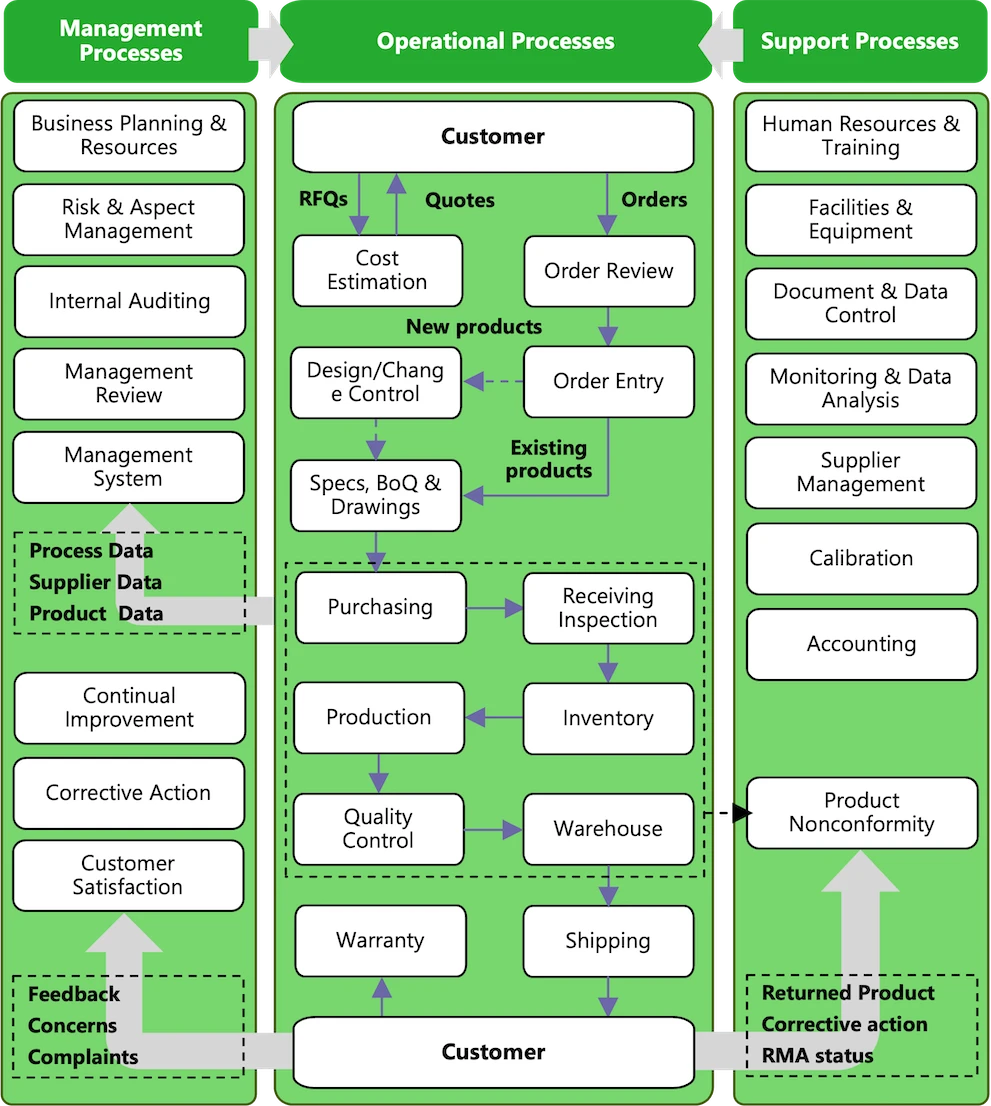
Sequence & Action of Processes
Resources and Training
For the Environmental Management System to operate effectively and efficiently, there needs to be sufficient provision made for resources by management. This ensures that people who operate within the EMS have the necessary training, guidance, and support to fulfill their tasks.

Evidence and Performance Indicators
Your organization should begin using environmental performance indicators to help control and monitor issues, and associated risks and opportunities.
Performance indicators are objective evidence that will indicate that your organization has successfully integrated the EMS processes into its business processes.
Evidence may include management reviewing environmental performance indicators as part of regular business reviews, briefings to contractors and employees about the environmental management system goals and expectations, etc.
ISO 14001:2026 Revision
The revised environmental management system standard, ISO 14001:2026, was published on 15 April 2026, with a three-year transition period giving organisations until April 2029 to update their EMS.


