

What Is A Calibrated Equipment Procedure?
Contents
- What is a Calibrated Equipment Procedure?
- What is Calibration?
- What Does ISO 9001 Require?
- What Is Equipment Calibration
- What Equipment Requires Calibration?
- What Industries Require Calibrated Equipment?
- What Is A Controlled Equipment Log
- What Is A Calibrated Equipment Log
- What Is A Calibration Interval
- What Is A Calibrated Equipment Schedule
- What Is A Calibrated Equipment Label
- What Is A Calibrated Equipment Certificate?
- Who is Responsible For Calibrated Equipment
- How To Implement A Calibrated Equipment Procedure
- What Are The Benefits Of The Calibrated Equipment Procedure?
- How To Audit The Calibrated Equipment Process
- What Are The Reference Standards?
- What Calibrated Equipment Records Do I Need?
- Can I Outsource Calibration?
- Conclusion
- Calibrated Test Equipment Procedure


What Is Calibration?
Calibration is the adjustment and standardization of the accuracy of measuring and test instruments, and it is usually carried out by comparison to a certified reference or standard.
What Does ISO 9001 Require?
ISO 9001, Clause 7.1.5 Monitoring and Measuring Resources requires organizations to ensure that measuring or test equipment, including all mechanical, electronic, automated, chemical, or other sensor equipment used to measure, gauge, test, inspect, or otherwise examine items or processes to determine compliance with specifications, is:
- Suitable for the intended use in the design, manufacture, and testing of components
- Capable of producing valid results
- Operated by trained employees
- Properly calibrated versus a suitable reference standard
You should record evidence to confirm that, where measurement traceability is a requirement, the test instruments used for measurement are controlled:
- Devices are calibrated at intervals or before use, based on recognized standards
- Devices are adjusted as necessary in accordance with the manufacturer’s instructions
- Devices are identified to enable their calibration status to be easily determined
- Devices are safeguarded from adjustment, which may invalidate results
- Devices are protected from damage during handling, maintenance, or storage
- The validity of results from a nonconfirming device is rechecked with a device that is known to conform
- Devices are calibrated by external providers certified to ISO 17025
- Records of calibration and verification are maintained
- Computer software, which is used for monitoring and measuring, must be validated before initial use
- Computer software used for monitoring and measuring is re-validated where necessary
If measurement traceability is not required, verify that your organization's monitoring and measuring resources are suitable. You should maintain documented information to demonstrate the suitability of monitoring and measuring equipment.
All Measuring or Test Equipment Requiring Calibration must be Identified and be:
1. Calibrated or verified at specific intervals, or before being used
Measuring or test equipment must be calibrated using reference standards traceable to international or national standards. Where no standard is available to compare the device, the basis for calibration or verification must be recorded. The traceability records must be reviewed when an outsourced process or vendor completes the calibration.
2. Adjusted or re-adjusted as necessary
Ensure that evidence that when measuring or test equipment is found to be out of calibration, it is adjusted/re-adjusted by qualified personnel. The validity of the previous measuring results is assessed when equipment is out of calibration and appropriate action is taken (may include product recall).
3. Identified to show calibration status
Ensure that each piece of measuring and test equipment is identified to enable the user to determine whether the device is currently calibrated. This may be accomplished by the equipment's unique serial number traceable to the calibrated equipment record; however, the calibration status label is a good practice.
Other methods may be used; however, they must clearly identify the calibration status. Where the environment is not conducive to using stickers, calibrated equipment status may be identified by a color-coded tag that displays an identification number that is traceable to the associated calibrated equipment’s record.
4. Safeguarded from adjustment
Ensure a process is in place to ensure users outside the calibrated equipment process do not adjust measuring or test equipment. Equipment must be verified before use; however, adjustments must meet this section's requirements.
Methods to safeguard measuring or test equipment may include locking away materials, using tamper-proof seals, limiting entrance to calibrated equipment areas, and other methods.
5. Protected from damage during handling, maintenance, and storage
Ensure that measuring or test equipment is handled and stored in a manner that protects the equipment from damage. This ensures that the integrity of the organization’s work is always within an allowable tolerance range.
What Is Equipment Calibration?
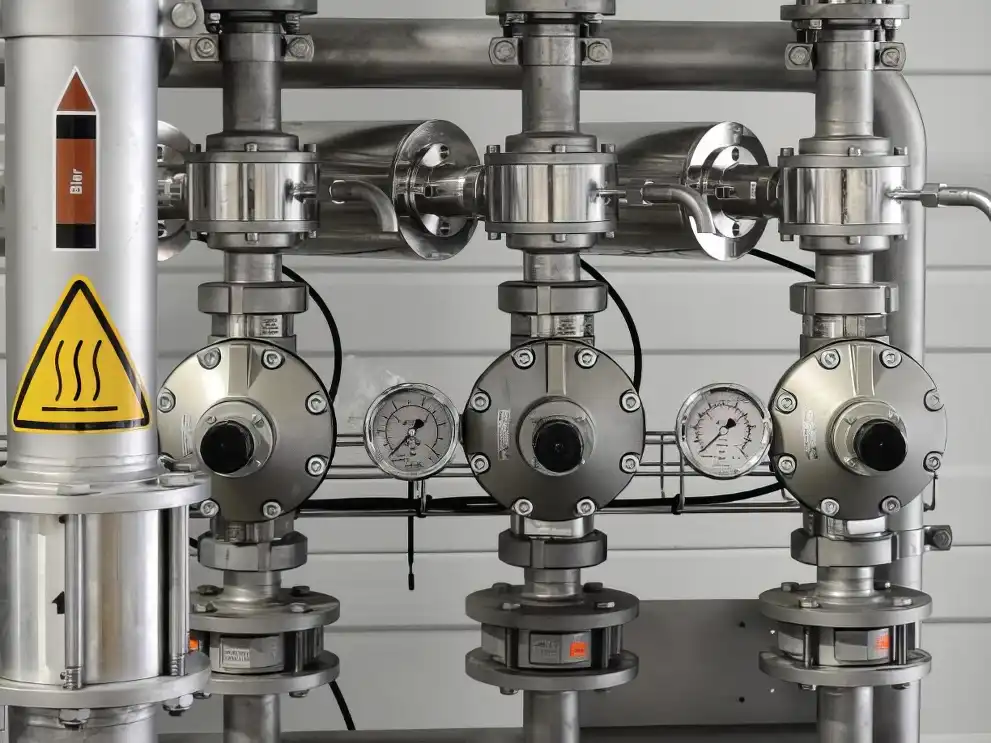
Measuring and test equipment calibration is fine-tuning a test instrument to ensure it accurately measures defined characteristics and parameters according to its intended purpose. When measuring or testing equipment is calibrated correctly, it can be used confidently, and its results are accurate within the specified limits.
Organizations must ensure that personnel involved in the test equipment calibration process are trained and competent in performing measurements and calibration activities. It is imperative to provide training on the proper handling and use of test equipment and calibration procedures. Documented training records must be maintained to demonstrate competence.
What Equipment Requires Calibration?
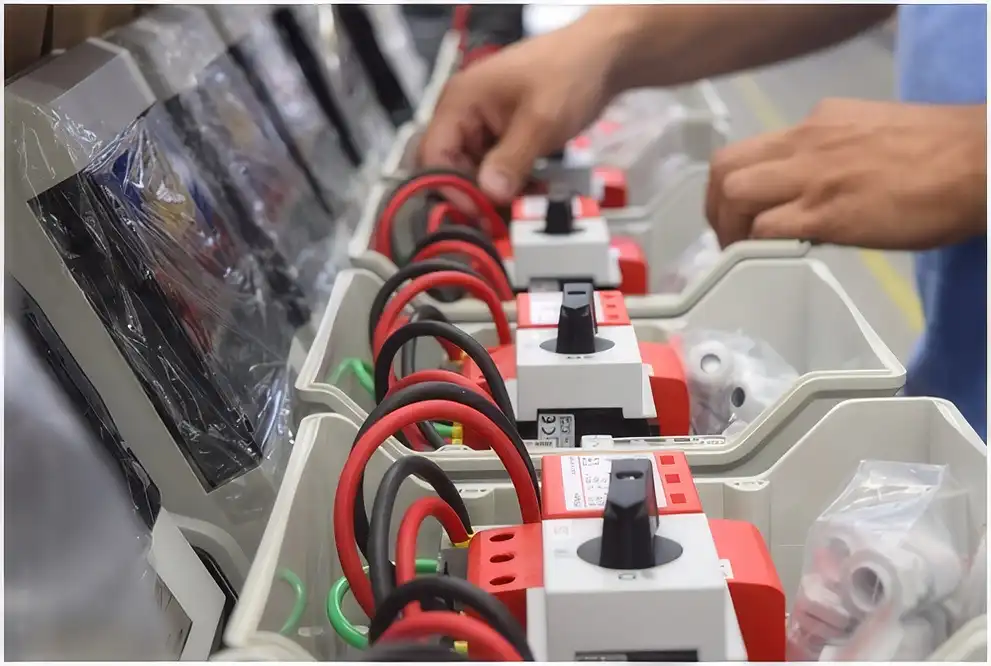
All measuring or test equipment used to measure and monitor critical product or process characteristics must be calibrated. The type of measuring or test equipment used depends on the processed product. Still, measuring or test equipment requiring calibration generally includes instruments that provide measurements or readings, such as scales, thermometers, micrometers, pressure gauges, and electrical tools.
Gas and pressure
Gas and pressure equipment calibration is essential for ensuring the accuracy of pressure readings in many industries, such as medicine, aviation, and manufacturing. Examples of gas and pressure measuring or test equipment that requires calibration include:
- Pressure and vacuum gauges
- Recorders and data loggers
- Barometers
- Pressure transmitters and transducers
Temperature
There are many different methods to calibrate temperature sensors; they all involve comparing the temperature sensor readings to a known value. Examples of temperature measuring or test equipment that requires calibration include:
- Digital thermometers
- Temperature controllers
- Infrared (IR) thermometers
- Dry block calibrators
- Glass thermometers
- Thermal cameras
Flow measuring
Flow meter calibration measures and adjusts the flow of a liquid or gas to ensure the test equipment’s accuracy, improve efficiency, or compensate for changes in temperature or pressure. Examples of flow measuring and test equipment that require calibration include:
- Rotameters – gas and air
- Thermal mass flowmeters
- Laminar flow meters
- Turbine meters
Electrical testing
Electrical calibration is essential for many industries, such as electrical engineering and manufacturing, where accurate measurements are critical. Examples of measuring or test equipment that requires electrical calibration include:
- Multimeters (handheld and multi-digit bench models)
- Insulation and resistance testers
- Frequency counters, frequency generators
- Pulse counters and multifunction testers
- Power supplies
- Pat testers
- Insulation testers
- Oscilloscopes, ammeters, and voltmeters
- Power analysers
- Decade/resistance boxes
- Loop testers
What Industries Require Calibrated Equipment?
Calibrated equipment is essential across various industries, including medical, manufacturing, and construction, to ensure the accuracy and reliability of measurements, which impacts product quality, safety, and legal compliance.
Regardless of your industry, calibrating your test equipment is crucial to ensuring regulatory compliance and receiving accurate measurements from your instruments.
Construction, Manufacturing, and Engineering
Routine calibration can stop construction, manufacturing, and engineering test equipment from malfunctioning, making it essential to the manufacturing industry. Calibration also assists companies as they attempt to meet industry or client-specific standards. Examples of industry-related measuring or test equipment that requires calibration include:
- Profilometers
- Ring and plug thread gauges
- Wireless thermo-hygrometers
- Dial gauge testers
- Depth micrometers
- Precision levels
- Gauge blocks
- Caliper checkers
- Vernier calipers
- Coating thickness testers
- Feeler gauges
- Hardness testers
- Torque wrenches and screwdrivers
Medical, Pharmaceutical, and Laboratory
Due to the importance of accuracy in medical and pharmaceutical testing and manufacturing processes, test equipment needs accurate and reliable calibration. Examples of industry-related measuring or test equipment that requires calibration include:
- Balances and scales
- Centrifuges
- Moisture analyzers
- Electronic digital balances
- Fluxgate magnetometers
- Microscopes
- Dissolution testers
- Ph Meters
Aviation and Defence
Calibrating in the aerospace industry is essential. Periodic calibration helps aerospace and defence companies to raise their reputation for producing high-quality products and helps save on costs from defects and errors. Examples of industry-related measuring or test equipment that requires calibration include:
- Oscilloscopes
- Avionics
- RF devices
- Hydraulic pressure sensors
- Safety switches

What Is A Controlled Equipment Log?
Use the controlled equipment log as the master inventory for all measuring or test equipment that your organization uses. Use the controlled equipment log to document information such as serial number, make, model, the maintenance interval, and the calibration interval of each specific piece of controlled equipment listed.
The controlled equipment log must include:
- A list of all measuring equipment and its location
- Equipment description and properties
- The equipment identification code which is also visible on the equipment
- Details the frequency of calibration and the next calibration due date
What Is A Calibrated Equipment Log?
Use the calibrated equipment log to record the calibration status of all the measuring or test equipment. Use the calibration log to document the current calibration status, e.g., date received, calibration due date, date of last calibration, date removed from service, etc., for each specific piece of controlled equipment listed.
Key information included in a calibrated equipment log:
- Equipment ID: A unique code for the equipment, manufacturer, and model
- Location: Where the equipment is located within an organization
- Calibration history: A record of when the equipment was calibrated, including the results, standards used, and any corrective actions taken
- Calibration frequency: The interval at which the equipment needs to be calibrated
- Next due date: The date on which the next calibration is scheduled
Whether your measuring or test equipment calibration is done internally or externally, the calibrated equipment log must be structured to track equipment calibration due dates to ensure it functions well in the long term, provide accurate measurements, and avoid safety risks associated with overdue calibrations.

What Is A Calibration Interval?
A calibration interval is the period between two consecutive scheduled calibrations of test equipment to ensure accuracy and reliability. Once this period ends, the accuracy of a device’s output is no longer guaranteed until it is recalibrated.
The calibration intervals are determined by factors such as the instrument's type and stability, its type, age, the required measurement accuracy, the environmental conditions in which it is stored and used, and the frequency of usage.
Proper calibration intervals are crucial for maintaining measurement integrity, minimizing costly errors, and ensuring compliance with quality standards and regulations. When a test equipment or instrument is purchased, the manufacturer’s instructions will recommend how often it needs to be calibrated.
For most electrical equipment, the calibration interval ranges from six months to two years. Some electrical equipment manufacturers may have different specifications depending on the calibration period. The manufacturers’ operating manuals must be consulted to determine the correct calibration interval..
Calibrated equipment used infrequently, such that the manufacturers’ recommendations cannot be followed, must be calibrated and verified before use. Before use, new equipment must undergo calibration and performance verification.
Calibration intervals should be shortened if measurement errors larger than allowed are detected, or lengthened if the measurements are within close limits of the original calibration. Calibration intervals can be determined by performing a technical and statistical analysis, or when the results of historical calibrations indicate that such action is appropriate to maintain acceptable reliability.
Reliability is defined as the probability that the measurement device will remain in tolerance throughout the established calibration interval. If the measuring or test equipment requires frequent adjustments or repairs or is found to be nonconforming in successive calibrations, the calibration interval should be shortened.
If the measuring or test equipment is used infrequently, it should be designated for calibration before use instead of establishing a set schedule for calibration.
Measuring or test equipment requiring recalibration should be calibrated within four weeks from the calibration due date, while test equipment that exceeds the calibration due date for more than four weeks must be removed from use until it is calibrated.

What Is A Calibrated Equipment Schedule?
The purpose of the calibrated equipment schedule is to ensure that all measuring and test equipment whose accuracy influences the quality of test results is calibrated at regular, defined intervals. The schedule must list the equipment that requires calibration, its calibration frequencies, and planned calibration dates.
The calibrated equipment schedule typically records the following information:
- Tool name
- Serial number
- Location
- Last calibration date
- Next calibration date
- Frequency
- Responsible person
- Notes
The calibrated equipment schedule should outline the calibration frequency for all measuring or test equipment, and consider factors such as usage, environmental conditions, and criticality of measurements. The calibration frequency must be determined by comparing the performance of the test equipment to:
- Calibration history
- Equipment purpose
- Manufacturer’s specifications
- Degree of usage
- Statistical analysis methods
- Equipment type
- Stability/reliability
Based upon the calibration interval, create the calibrated equipment schedule, and ensure all of your measuring or test equipment is logged and accounted for in the schedule. Include notifications and reference all documentation of calibration results and certificates. Ensuring timely calibration supports quality control, compliance, and the accurate operation of test equipment.
What Is A Calibrated Equipment Label?
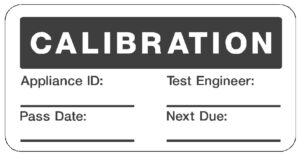
By using calibrated equipment labels, you can efficiently keep track of when test equipment is due to be calibrated, eliminating the chances of inaccurate instruments going unnoticed.
Printed labels should be used to identify the calibration status of each measurement instrument and provide relevant information to the user.
The calibrated equipment labels are crucial in fields like healthcare, manufacturing, and electronics to maintain accurate measurements, prevent product issues, and inform users when a device is due for testing. Calibration calibrated equipment stickers must be used in conjunction with the certificate; they detail critical information such as:
- Calibrated by
- Calibration certificate number
- Date calibrated
- The due date for the next calibration
What Is A Calibrated Equipment Certificate?
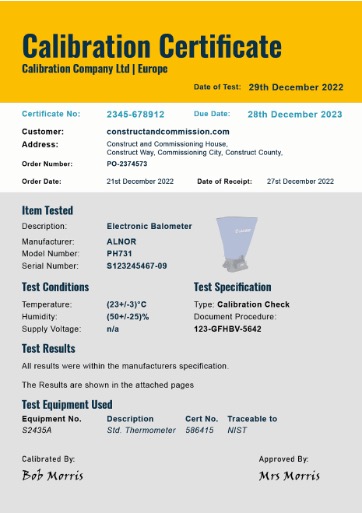
Businesses should obtain and maintain up-to-date calibrated equipment certificates for all their measuring or test equipment.
The calibrated equipment certificates prove that an accredited laboratory has calibrated your test equipment and its readings are accurate within specified tolerances.
Calibrated equipment certificates and reports will always contain the following, whether the calibration is performed by an outside laboratory or performed internally:
- Complete identification of the test equipment calibrated (manufacturer, model, serial number, Product Resources’ control number)
- The party performing the calibration
- The date of the calibration
- The reference standards used in the calibration
- Their identification, type of traceability, and due date
- As-found data with an assessment of in-tolerance or out-of-tolerance
- As-returned data with an assessment of in-tolerance or out-of-tolerance
- Signature or initials of the party performing the calibration
Calibrated equipment certificates and records must be available and current, and state the acceptable equipment tolerance limits. Upon accepting back calibrated equipment from an outside lab, the quality manager should review the calibration certificate or report for correctness and the as-received and as-returned statuses.

Who is Responsible For Calibrated Equipment?
The quality manager is usually responsible for implementing and maintaining the calibrated equipment procedure, and for the calibration administration of responsibilities. As an organization, it is essential to ensure that each department has a nominated person who is directly accountable for any defective equipment or inaccurate data.
The quality manager should ensure that any measuring or test equipment that does not meet these criteria is isolated from use and recalibrated before being used, and that test equipment used to calibrate measuring or test equipment is traceable to a national or International standard unit of measurement.
Recognizing the importance of their role, it is good practice to identify a calibration supervisor responsible for ensuring that all required measurements are taken and equipment is regularly calibrated.

How To Implement A Calibrated Equipment Procedure?
Calibrated equipment procedures must be appropriate for the test equipment's intended use and provide the criteria for determining if calibration is satisfactory. To establish a calibrated equipment procedure, please follow these six simple steps:
1. Identify Which Calibrated Equipment Needs to Be Tested
The most important part of calibration is to know what you are calibrating. As a rule of thumb, it’s best to make a list with the name and description of any measuring or test equipment used by your organization.
It is crucial to prioritize the pieces of measuring or test equipment to be tested based on how frequently workers at your company employ them. Once this is determined, it becomes easier to identify who needs training for specific devices so errors don’t happen when using them.
2. Identify Inspection and Measurement Processes
Once you have identified what measuring or test equipment needs to be calibrated, you can then decide whether this will be done as part of an existing process or if there is a separate procedure in place for it. For example, if you need to calibrate a pH meter, this could be done as part of routine maintenance.
You may need to establish a separate calibrated equipment procedure to test a different piece of measuring or test equipment. Each measurement instrument should be traceable through its own calibrated equipment record, which contains:
- Identification number
- Manufacturer and model
- Frequency of calibration
- Reference standards used
- Validation certificates and calibration findings
- Details of the actions taken in case of unsatisfactory results
For software testing, calibration might include inputting normal and abnormal (limited case) data to test programming performance and error handling to ensure the software and associated equipment meet the specifications.
The test protocol, testing, results, and reviews should be documented, and any changes to the programming should be formally reviewed and approved before final acceptance.
Similarly, validated, automated machine tools such as lathes, printed-circuit drills, and component inserters can be monitored and maintained by conducting a ‘first’ and ‘last-piece’ inspection of representative product lots to assure accuracy.
3. Decide On The Calibration Frequency
Depending on the equipment and its usage, you must decide which frequency calibration should occur. For example, equipment that operates in high-risk fields like food safety may need calibration more frequently than other machines.
The calibration frequency is usually determined by comparing the performance of the measuring equipment to:
- Equipment’s purpose
- Manufacturer’s specifications
- Degree of usage
- Equipment type
- Stability/reliability
4. Assign The Responsibilities For Calibration
The selection and training of competent calibration personnel is an important consideration, and the personnel involved with calibrated equipment should possess and demonstrate the following qualities:
- Technical education and experience in the area of job assignment
- Basic knowledge of metrology and calibration concepts
- Understanding basic principles of metrology, data processing, and acceptance requirements
- Knowledge of the overall calibrated equipment program
- Ability to follow maintenance instructions, the use of measurement equipment, and standards
- Mental attitude, which results in safe, careful, and exact execution of their duties
Decide who will be responsible for carrying out each calibration process. It’s crucial to assign primary responsibility for specific areas within this procedure. Some of it may be carried out by separate departments.
- Select suitable equipment to perform the required measurements with accuracy and precision
- Extend the control of inspection and test equipment to all approved suppliers where applicable
- Ensure that inspection and test equipment cannot be used if they are not registered and calibrated
- Ensure inspection and test equipment is calibrated in a suitable environment
- Control all measurement, calibration, and maintenance activities
All employees and process owners are required to:
- Check that inspection and test equipment is not damaged and is fit for purpose
- Check the calibration status of inspection and test equipment before use
For example, suppose you must calibrate a piece of measuring or test equipment used across your organization. In that case, each department should be able to carry its own measurements. A commercial laboratory accredited to ISO 17025 should be used for calibration when calibration cannot be accomplished in-house.
5. Decide On The Custody Of Calibration Tools
The team must decide how they will store calibration tools. They can keep them in one designated place with a lock or two separate locations that are locked and secure at all times, such as the Quality Manager’s office or in proximity to the technicians on duty.
As appropriate, ensure that environmental controls are established and maintained to ensure that monitoring and measuring instruments are calibrated, and used in conditions that will not adversely affect the accuracy of the measurements.
Consideration must be given to the effects of temperature, humidity, vibration, and cleanliness when purchasing, using, calibrating, and storing instruments.
6. Identify The Relevant Standards
Decide which standards and procedures will be used to ensure correct calibration. It may help if you check whether the standards require you to include anything specific in this procedure to meet their requirements.
Start with Expert Templates, then Make Them Yours

What Are The Benefits Of The Calibrated Equipment Procedure?
There are many benefits to having a calibrated equipment procedure in place. One of the main advantages is that it shows everyone involved how to maintain accuracy throughout the stages of testing. This means you will avoid problems with your product or inaccurate documentation.
Another benefit is that it makes the calibrated equipment process easier to carry out. The calibrated equipment procedure should serve as a reminder of what must be done during each stage and when it’s due. This means technicians will not worry about missing deadlines or forgetting essential processes.
It also gives you an audit trail for future equipment changes, modifications, or additions. The procedure should be kept up-to-date if there are any changes. Otherwise, you may run into problems in the event of an audit by the regulator.

How To Audit The Calibrated Equipment Process
The calibrated equipment process is critical to maintaining compliance and ensuring quality. As such, organizations must ensure the systematic and independent audit of their calibrated equipment system and objectively evaluate the results to determine the extent to which the audit criteria are fulfilled. Audits of the calibrated equipment process must be documented.
The calibrated equipment process is not just a checkbox exercise; it is evidence that auditors will inspect to confirm your system is reliable. You risk nonconformance if you cannot explain your calibration methods, traceability, or frequency. Ensure that essential results are reviewed with management, and that corrective action is taken as appropriate.
Clause 7.1.5.1 Monitoring & Measuring Resources - General
| Requirement | Guidance |
| Does your organization determine and provide the resources needed to ensure valid and reliable results when monitoring or measuring is used to verify the conformity of products and services to requirements? | Your organization needs to decide what tools it uses to measure business performance. It also needs to consider whether these tools will give them everything they need as a result. |
| Does your organization ensure that the resources provided suit the specific monitoring and measurement activities being undertaken? | Describe how the resources are determined to ensure valid and reliable monitoring and measuring results, where used. |
| Does your organization maintain the resources to ensure its continuing fitness for its purpose? | Describe how you ensure that the resources provided are suitable for the specific monitoring and measurement activities and are maintained to ensure continued fitness for purpose? |
| Does your organization retain appropriate documented information as evidence that they are fit for purpose? | Describe how you ensure that the resources provided are suitable for the specific monitoring and measurement activities and are maintained to ensure continued fitness for purpose? |
Clause 7.1.5.2 Measurement Traceability
| Requirement | Guidance |
|
When measurement traceability is a requirement, or is considered by your organization to be an essential part of providing confidence in the validity of measurement results, is measuring equipment calibrated or verified, or both, at specified intervals, or before use, against measurement standards traceable to international or national measurement standards; when no such standards exist, is the basis used for calibration or verification retained as documented information? |
Describe whether this is relevant to your organization and whether it meets all applicable requirements for the product and services. How do you determine this? Is it required to be calibrated? Are unique reference numbers allocated and listed on a register of calibrated equipment? If there are no such standards, you should review the documented information used as the basis for calibration or verification. |
|
When measurement traceability is a requirement, or is considered by your organization to be an essential part of providing confidence in the validity of measurement results, is calibrated equipment identified to determine its status? |
Determine whether your organization is expected to check results from calibration to ensure they are confident that they have not been tampered with. Sampling of commissioning paperwork to ensure the readings are consistent with expectations and/or parameters set. Are measurement instruments identified to determine their calibration status with expiry and test dates? |
|
When measurement traceability is a requirement, or is considered by your organization to be an essential part of providing confidence in the validity of measurement results safeguarded from adjustments, damage, or deterioration that would invalidate the calibration status and subsequent measurement results? |
Does your organization allocate personnel as and when needed and have a straightforward process to ensure all staff know how to use it properly? Demonstrate how measurement instruments are safeguarded from adjustments. How is calibrated equipment safeguarded from damage and deterioration? |
|
Does your organization determine if the validity of previous measurement results has been adversely affected when calibrated equipment is found unfit for its intended purpose? |
Describe how the organization determines the validity of previous measurements if you find calibrated equipment defective during verification or calibration. |
|
Does your organization take appropriate action when calibrated equipment is found unfit for its intended purpose? |
What appropriate actions does your organization take? |
Establishing an audit trail for your calibrated equipment process will involve documenting the changes or modifications made to the measuring or test equipment or the calibration process itself. Include details about who performed the changes, the reason for the modification, and any validation or verification performed afterward.
Note: A digital calibration and monitoring solution will automatically keep track of changes, certificates, and all other relevant records and provide you with instant access to all data to make complying with an auditor’s requests quick and efficient.
Continual improvement of the calibrated equipment system must be a planned and managed activity based on the results of the audits, management reviews, corrective actions taken, and other relevant factors. The results of all calibrated equipment system audits and all system changes must be recorded and used.

What Are The Reference Standards?
If you have an in-house calibration laboratory, maintain appropriate calibrated equipment, including calibrated reference temperature and humidity sensors. Simply put, these reference standards should have higher accuracy and stability than the test equipment or sensor being calibrated, and the method used needs to be substantiated and tested. You must also regularly check and calibrate your reference standards to ensure accuracy.
The reference standard is the material or substance with one or more property values that are sufficiently homogeneous and established to calibrate an apparatus, assess a measurement method, or assign values to materials.
Traceability is the ability to link the measurement standards or the measuring instruments to the relevant national or international standards through an unbroken chain of comparisons.
Reference standards and reference materials must be handled only by authorized employees and stored to prevent contamination or deterioration. All reference standards and certified reference materials used for calibrated equipment must be uniquely identified. All certificates must be retained to ensure traceability.
How Is Calibrated Equipment Maintained?
Regular maintenance protects calibrated equipment and other instruments from wear and tear. This sustains their functionality and performance so they operate at their best, while calibration fine-tunes instruments to standardized benchmarks, ensuring they run and measure correctly.
Calibrated equipment must have documented procedures for the maintenance process. Maintenance procedures and frequencies should be available for each piece of equipment, either in the form of vendors' manuals or in-house procedures.
The operating and maintenance manuals must be readily available to the operator. In the absence of the manufacturer’s instructions, instructions are provided in technical procedures.
Preventative maintenance procedures (other than basic cleaning) for each equipment item must be developed unless described elsewhere (e.g., the equipment manual) and performed according to a regular, predetermined schedule.
All calibrated equipment must be maintained in good operating order and according to manufacturer and/or department maintenance requirements. Preventative maintenance must be documented in the maintenance records.
Records of maintenance must be maintained and include the following:
- Type of equipment
- Equipment serial number or unique identifier
- Date of maintenance
- Adjustments or repairs made
- Identity of the individual performing maintenance
If an outside vendor performs maintenance, the quality manager or designee must retain the original maintenance records provided by the vendor.
When an item of test equipment is retired from service, its maintenance and repair records must be incorporated into the archives by the quality manager or designee.
Calibrated equipment subjected to overloading or mishandling, gives suspect results, is defective, or is outside the specified limits, must be taken out of service. It shall be isolated and/or clearly labeled (Out of Service – Do Not Use) to prevent use until repaired and shown by calibration or test to perform correctly.
Before returning a piece of test equipment to use, its correct operation must be demonstrated by calibration or performance verification.
An exception may be made if the equipment failure is not directly related to its analytical function, such as a problem with peripheral equipment. Measuring or test equipment must be taken out of service for calibration following the last day of the calibration-due month and may be taken out of service earlier.

What Calibrated Equipment Records Do I Need?
Keep meticulous records of all calibration activities. This includes documenting each calibration's date, time, and results, as well as any adjustments or repairs made. Maintain a calibration log for each piece of test equipment, which describes when it was last calibrated and when the next calibration is due.
These records serve as evidence of compliance during an audit. Each measurement instrument must be traceable through its own calibration record, which contains:
- Identification number
- Manufacturer and model
- Frequency of calibration
- Reference standards to be used
- Validation certificates and calibration findings
- Details of actions taken in case of unsatisfactory results
Businesses should develop and document detailed calibration procedures for their test equipment. The calibrated equipment procedures should outline all the calibration steps and specify the environmental conditions, reference standards, and measurement techniques. Make sure your calibration procedures align with industry best practices and relevant standards.
Maintain traceability documentation demonstrating an unbroken and transparent chain of calibration information for test equipment and remote sensors. This includes information about the calibration laboratory, standards, equipment, and procedures. Traceability ensures that your calibration process is reliable and can be validated.

Can I Outsource Calibration?
ISO/IEC 17025 is the International Standard for the accreditation of Testing and Calibration Laboratories. It includes quality management system requirements along with technical requirements. In the UK, ISO/IEC 17025 accreditation is provided by UKAS. So, calibration performed by an ISO/IEC 17025 accredited laboratory is often called ‘UKAS Calibration’.
A commercial laboratory accredited to ISO 17025 must be used for calibration when calibration cannot be accomplished in-house.
- The calibration facility must comply with internationally recognized calibration standards
- The Quality Manager will evaluate the calibration facility
- Calibration certificates will be required
The supplier selection process approves external parties used for calibration purposes, who will be surveyed by competent personnel to verify that their calibration system conforms to the requirements.

Conclusion
By having the calibrated equipment elements we discussed ready, you can confidently demonstrate to auditors that your test equipment or sensors are accurately calibrated, providing reliable measurements that comply with requirements and standards.
All measuring or test equipment and software performance data must be reviewed. Audits of software and equipment maintenance procedures and records should evaluate the adequacy of safeguards, change controls, and other controls necessary to maintain software quality and proper performance of associated measuring or test equipment.

Related Information You Might Find Useful
- 7.1.5 Monitoring and Measuring Resources for ISO 9001
- 9.1 Monitoring Measuring & Analysis Procedure Explained
- Journal of Research of the National Institute of Standards and Technology: A Careful Consideration of the Calibration Concept
- Govinfo: Calibration and Related Measurement Services Of The National Bureau Of Standards

 ISO 9001
 Process Maps
 Reports & Forms


